
The Next Crypto Bull Run
Published: July 2026
Category: Markets • Bitcoin • Blockchain • Analysis
Every cryptocurrency market cycle has followed a familiar pattern. A period of rapid growth attracts new investors, media attention reaches record levels, capital floods into digital assets, and prices climb to new highs. Eventually, the market cools, speculation fades, weaker projects disappear, and attention shifts elsewhere. Then, quietly, the industry begins building again.
History suggests that the most important developments in cryptocurrency rarely happen during the peak of a bull market. They occur during the quieter periods that follow—when developers write code, companies invest in infrastructure, regulators refine policy, and institutions prepare for long-term participation.
As the digital asset industry moves through another phase of maturity, many analysts are asking the same question: What could drive the next major crypto bull run?
Unlike previous cycles, the answer may have less to do with speculation and more to do with adoption.
Looking Back at Previous Cycles
Bitcoin has experienced several major market cycles since its launch in 2009.
The first significant rally occurred in 2013, when Bitcoin gained international attention after rising from below $20 to more than $1,000 for the first time. The following correction was severe, but it laid the groundwork for greater awareness of blockchain technology.
The next historic cycle unfolded between 2016 and 2017. During this period, Bitcoin climbed from around $400 to nearly $20,000, while Ethereum introduced smart contracts to a broader audience. The Initial Coin Offering (ICO) boom attracted thousands of blockchain startups and billions of dollars in investment before the market corrected sharply in 2018.
The third major cycle began after the 2020 Bitcoin halving. Fueled by institutional investment, expanding decentralized finance (DeFi), growing interest in NFTs, and increasing corporate adoption, Bitcoin reached nearly $69,000 in late 2021. Ethereum, Solana, and numerous other blockchain ecosystems also experienced rapid growth.
Each cycle looked different, but they shared one common characteristic: technological progress continued regardless of market sentiment.
The Industry Is Larger Than Ever
Although cryptocurrency prices fluctuate, the underlying ecosystem has continued expanding.
Today the industry includes:
- Spot Bitcoin exchange-traded funds (ETFs)
- Institutional custody providers
- Publicly traded mining companies
- Global payment processors
- Stablecoin issuers
- Decentralized finance platforms
- Layer 2 blockchain networks
- Enterprise blockchain solutions
- Tokenized financial assets
- Artificial intelligence integrations
The digital asset economy is significantly more mature than it was during previous bull markets.
Rather than relying solely on retail investors, today’s market increasingly includes banks, hedge funds, asset managers, payment companies, technology firms, and multinational corporations.
Institutional Capital Changes Everything
Perhaps the biggest difference between earlier market cycles and today’s environment is institutional participation.
Large financial organizations have gradually shifted from observing cryptocurrency to actively investing in blockchain infrastructure and digital assets.
The approval and continued growth of regulated Bitcoin investment products have provided institutional investors with familiar and compliant ways to gain exposure to the market.
This influx of professional capital tends to be larger, longer-term, and more strategically allocated than speculative retail investment.
If institutional participation continues expanding, future market cycles may become increasingly driven by infrastructure development rather than speculation alone.
Regulation Is Becoming Clearer
One of cryptocurrency’s greatest challenges has always been regulatory uncertainty.
Businesses require predictable legal frameworks before making substantial long-term investments.
Over the past several years, governments have accelerated efforts to establish rules governing digital assets, exchanges, stablecoins, custody providers, and blockchain businesses.
Although regulations differ between countries, greater clarity allows companies to:
- Build products with confidence
- Attract institutional investment
- Improve consumer protections
- Expand internationally
- Develop compliant financial services
Clear regulation may ultimately become one of the strongest catalysts for broader blockchain adoption.
Artificial Intelligence Is Entering Blockchain
Artificial Intelligence has become one of the fastest-growing technology sectors in the world.
Its influence is increasingly extending into blockchain ecosystems.
AI applications now assist with:
- Smart contract analysis
- Fraud detection
- Infrastructure monitoring
- Predictive maintenance
- Trading analytics
- Cybersecurity
- Network optimization
- Risk management
As AI becomes more deeply integrated into blockchain infrastructure, digital asset platforms may become smarter, more efficient, and more secure.
Bitcoin Mining Continues to Strengthen
While market prices often dominate headlines, Bitcoin’s mining industry continues investing heavily in infrastructure.
Mining companies have expanded operations through:
- More efficient ASIC hardware
- Renewable energy partnerships
- Liquid cooling
- Immersion cooling
- High-speed networking
- AI-assisted monitoring
- Advanced data center design
These investments increase the resilience and security of the Bitcoin network regardless of short-term market conditions.
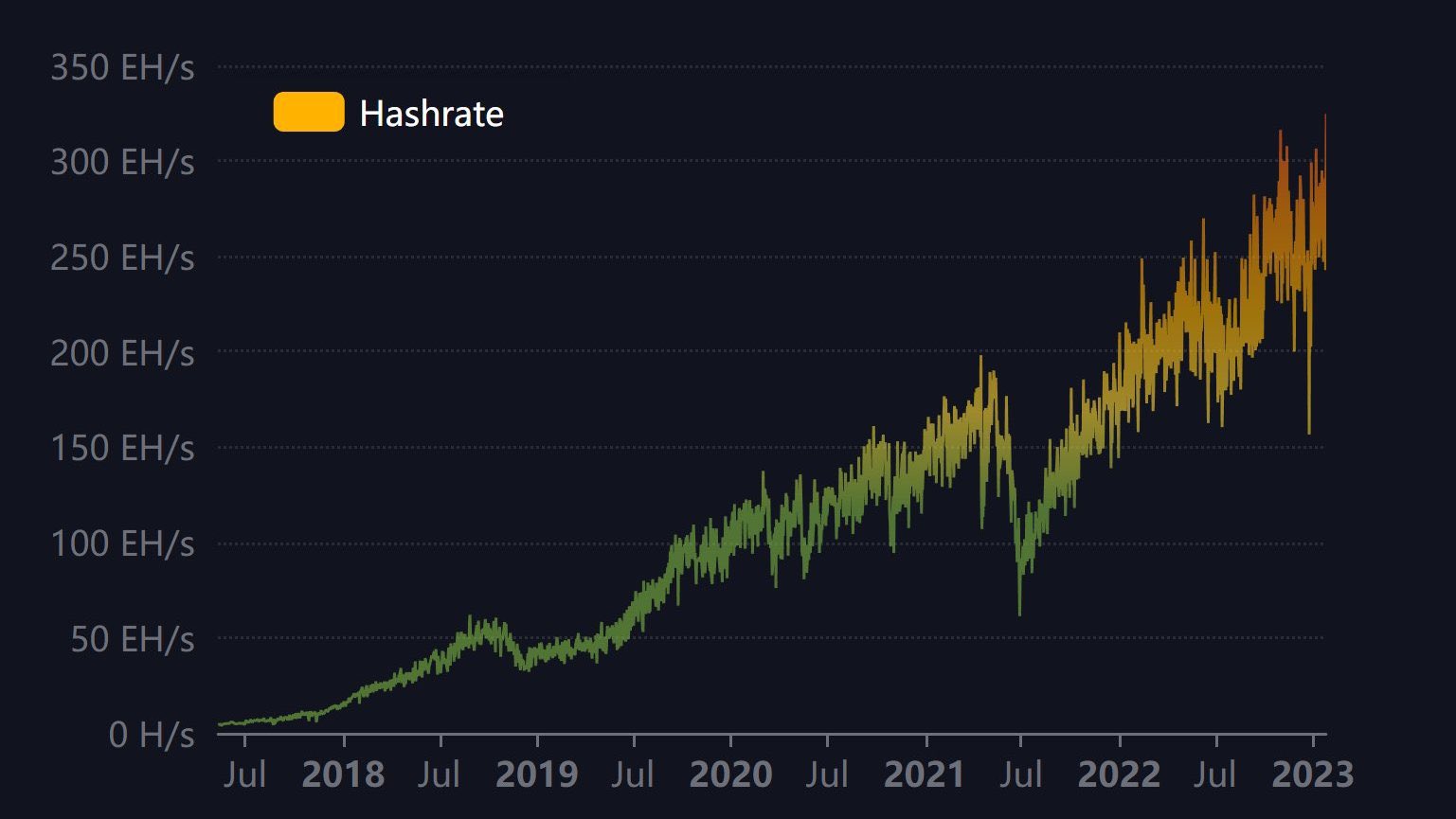
Historically, rising hashrate has often reflected long-term confidence among miners, even during periods of market volatility.
Tokenization Could Unlock Trillions
One of blockchain’s most promising opportunities lies outside cryptocurrency trading itself.
Financial institutions are increasingly exploring the tokenization of:
- Government bonds
- Corporate debt
- Real estate
- Commodities
- Investment funds
- Private equity
- Infrastructure projects
Tokenization enables traditional financial assets to move more efficiently across blockchain networks, reducing settlement times while improving transparency and accessibility.
Many analysts believe tokenized real-world assets could become one of blockchain’s largest long-term growth sectors.
Emerging Markets Drive Adoption
In many developing economies, blockchain technology serves practical purposes beyond investment.
Businesses use stablecoins for international payments.
Freelancers receive salaries from overseas clients.
Merchants accept digital payments.
Consumers gain access to financial services where traditional banking remains limited.
As internet connectivity expands and smartphone adoption continues growing, blockchain-based financial services may reach millions of new users.
The Importance of Infrastructure
Every major technological revolution depends upon infrastructure.
The internet required fiber-optic networks.
Cloud computing required data centers.
Artificial intelligence requires high-performance computing.
Similarly, blockchain depends upon:
- Mining infrastructure
- Validator networks
- High-speed networking
- Secure wallets
- Data centers
- Cybersecurity
- Developer ecosystems
- Cloud infrastructure
These foundational technologies often receive less attention than market prices but ultimately determine the industry’s long-term success.
Looking Ahead
Predicting the exact timing of the next cryptocurrency bull market is impossible.
Market cycles are influenced by global economic conditions, monetary policy, investor sentiment, technological innovation, regulation, and countless other variables.
However, one trend is increasingly clear.
The cryptocurrency industry has matured considerably since Bitcoin’s launch in 2009.
The conversation has shifted from whether blockchain technology has value to how it can be integrated into global finance, enterprise software, digital identity, artificial intelligence, and international commerce.
Future bull markets are likely to be driven not only by speculation but also by genuine technological adoption.
Final Thoughts
The next crypto bull run may look very different from those that came before it.
Instead of being fueled solely by retail enthusiasm, it could be supported by institutional investment, regulatory clarity, tokenized assets, artificial intelligence, enterprise adoption, and increasingly sophisticated blockchain infrastructure.
Behind every market rally lies years of engineering, research, and innovation.
While prices will always capture headlines, the real story is being written by developers, miners, researchers, entrepreneurs, and organizations building the technologies that support the decentralized economy.
At Bitmore, we believe understanding these long-term trends is more valuable than chasing short-term market movements. As blockchain continues to evolve, the strongest opportunities will belong to those who recognize that every bull market is ultimately built on a foundation of technological progress.
O my friend — but it is too much for my strength — I sink under the weight of the splendor of these visions! A wonderful serenity has taken possession of my entire soul, like these sweet mornings of spring which I enjoy with my whole heart. I am alone, and feel the charm of existence in this spot, which was created for the bliss of souls like mine.
I am so happy, my dear friend, so absorbed in the exquisite sense of mere tranquil existence, that I neglect my talents. I should be incapable of drawing a single stroke at the present moment; and yet I feel that I never was a greater artist than now.
When, while the lovely valley teems with vapor around me, and the meridian sun strikes the upper surface of the impenetrable foliage of my trees, and but a few stray gleams steal into the inner sanctuary, I throw myself down among the tall grass by the trickling stream; and, as I lie close to the earth, a thousand unknown plants are noticed by me: when I hear the buzz of the little world among the stalks, and grow familiar with the countless indescribable forms of the insects and flies, then I feel the presence of the Almighty, who formed us in his own image, and the breath of that universal love which bears and sustains us.