
Published: June 2024
Category: Bitcoin Mining • Industry • Infrastructure
Bitcoin mining has evolved into one of the world’s most sophisticated computing industries. What started in 2009 with hobbyists running software on home computers has transformed into a global network of industrial-scale operations investing billions of dollars in infrastructure, renewable energy, advanced cooling systems, and specialized semiconductor technology.
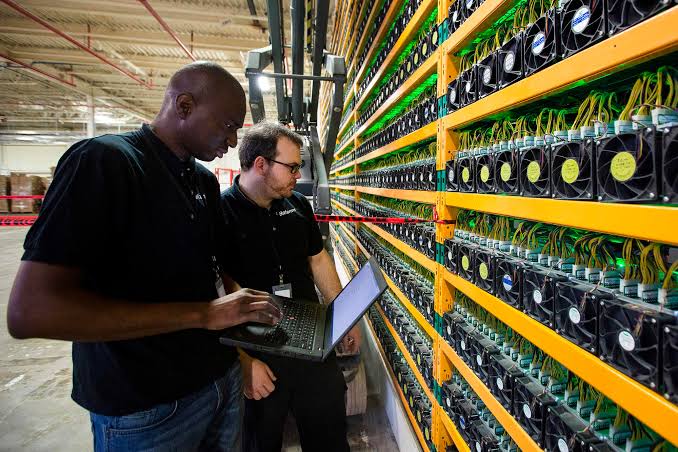
Today, the largest mining companies operate facilities comparable to modern hyperscale data centers. Their success depends not only on the price of Bitcoin but also on engineering excellence, operational efficiency, and long-term strategic planning.
From Laptops to Industrial Data Centers
When Bitcoin launched in January 2009, mining required nothing more than a standard CPU. As the network grew, miners transitioned to graphics cards (GPUs), then to Field Programmable Gate Arrays (FPGAs), and eventually to Application-Specific Integrated Circuits (ASICs), purpose-built chips capable of performing trillions of SHA-256 calculations every second.
This evolution dramatically increased the network’s security but also raised the level of competition. Mining became less about individual hobbyists and more about organizations capable of designing and operating large-scale computing infrastructure.
The Public Mining Industry
Several Bitcoin mining companies are now publicly traded on major stock exchanges, providing investors with direct exposure to the mining sector.
Some of the industry’s best-known operators include:
- Marathon Digital Holdings
- Riot Platforms
- CleanSpark
- Core Scientific
- Hut 8
- Cipher Mining
- Bitfarms
- Iris Energy
Together, these companies operate hundreds of thousands of ASIC miners across multiple facilities and collectively represent billions of dollars in infrastructure investment. Their operations span North America, South America, Europe, the Middle East, and other regions where reliable power and favorable operating conditions are available.
Measuring Success Beyond Bitcoin
Mining companies monitor far more than the daily price of Bitcoin.
Key performance indicators include:
- Total hash rate
- Fleet efficiency (J/TH)
- Power costs
- Mining uptime
- Infrastructure utilization
- Operating margin
- Bitcoin production
- Hardware availability
- Cooling efficiency
- Network connectivity
Even a small improvement in uptime can translate into substantial increases in annual production when thousands of machines operate continuously.
The Search for Efficient Power
Electricity remains the largest operational expense in Bitcoin mining.
As a result, mining companies invest heavily in energy strategy.
Leading operators increasingly source electricity from:
- Hydroelectric stations
- Wind farms
- Solar installations
- Natural gas recovery projects
- Nuclear-supported grids
- Excess renewable generation
- Grid stabilization programs
Some companies also participate in demand-response initiatives, temporarily reducing power consumption during periods of peak grid demand. This allows mining operations to support electrical grid stability while generating additional revenue through energy management programs.
Building Mining Campuses
A modern mining campus involves far more than rows of mining machines.
Typical infrastructure includes:
- High-voltage substations
- Industrial transformers
- Switchgear systems
- Fiber-optic internet connections
- Redundant networking
- Environmental monitoring
- Intelligent power distribution units
- Backup power systems
- Security monitoring
- Operations control centers
Large facilities may also include maintenance workshops, spare parts inventories, repair laboratories, logistics centers, and dedicated engineering teams responsible for continuous optimization.
The Rise of Immersion Cooling
One of the most significant technological trends in recent years has been the adoption of immersion cooling.
Instead of using traditional fans, ASIC miners are submerged in non-conductive dielectric fluid that absorbs heat far more efficiently than air.
Potential advantages include:
- Lower operating temperatures
- Reduced hardware failures
- Less dust contamination
- Lower noise levels
- Increased overclocking potential
- Longer equipment lifespan
Although air cooling remains widely used, immersion technology is becoming increasingly attractive for operators seeking maximum efficiency from next-generation ASIC hardware.
Artificial Intelligence in Mining
Mining companies now generate millions of operational data points every day.
Artificial Intelligence is helping transform that information into practical insights.
AI-powered platforms can monitor:
- Equipment temperatures
- Fan performance
- Hash rate fluctuations
- Power consumption
- Network latency
- Environmental conditions
- Predictive maintenance schedules
- Equipment health
Instead of waiting for machines to fail, operators can identify potential issues early, reducing downtime and improving profitability.
The Economics of Scale
One of the defining characteristics of industrial Bitcoin mining is economies of scale.
Larger companies often benefit from:
- Bulk hardware purchasing
- Lower electricity costs
- Dedicated engineering teams
- Centralized monitoring
- Better financing options
- Long-term supplier agreements
- More efficient maintenance operations
These advantages allow large operators to remain competitive even during periods of lower Bitcoin prices.
However, scale also introduces complexity. Managing tens of thousands of mining devices requires sophisticated software, experienced personnel, and continuous infrastructure monitoring.
Global Competition Continues
Mining companies increasingly compete on an international stage.
When selecting new locations, operators evaluate factors including:
- Electricity pricing
- Grid reliability
- Political stability
- Regulatory certainty
- Climate conditions
- Tax policies
- Internet infrastructure
- Workforce availability
Regions capable of providing affordable, reliable energy and supportive business environments continue attracting substantial mining investment.
Beyond Mining Bitcoin
Many mining companies are expanding beyond traditional cryptocurrency mining.
Existing infrastructure can also support:
- Artificial intelligence computing
- Cloud infrastructure
- High-performance computing (HPC)
- Scientific simulations
- Enterprise data processing
- GPU compute clusters
As global demand for computing power continues rising, mining operators are increasingly exploring ways to diversify their infrastructure while leveraging existing expertise in power management and large-scale computing.
Challenges Facing the Industry
Despite rapid growth, Bitcoin mining continues to face important challenges.
These include:
- Hardware supply constraints
- Increasing mining difficulty
- Regulatory changes
- Energy market volatility
- Semiconductor competition
- Cybersecurity threats
- Environmental expectations
- Infrastructure financing
Successfully navigating these challenges requires long-term planning rather than reacting solely to short-term market conditions.
Looking Ahead
The future of Bitcoin mining will be defined by innovation.
Advances in semiconductor technology, artificial intelligence, cooling systems, renewable energy, and automation will continue improving operational efficiency while strengthening the security of the Bitcoin network.
Mining companies are becoming infrastructure companies—building sophisticated computing environments capable of supporting not only blockchain networks but also the broader digital economy.
For Bitmore, these developments highlight an important reality: the future of mining is no longer measured only by hash rate. It is measured by engineering excellence, intelligent infrastructure, sustainable energy, and the ability to adapt to one of the fastest-moving industries in the world.
As Bitcoin continues to mature, the organizations investing in research, efficiency, and resilient infrastructure will be best positioned to shape the next generation of decentralized computing.