
The Race for Efficiency After the Halving
Published: July 2026
Category: Bitcoin • Mining • Infrastructure • Technology
Bitcoin mining has always been an industry defined by constant innovation. From the early days when enthusiasts mined Bitcoin using ordinary desktop computers to today’s industrial-scale facilities powered by highly specialized ASIC machines, every stage of Bitcoin’s evolution has demanded greater efficiency, stronger infrastructure, and smarter engineering.
Since Bitcoin’s fourth halving in 2024, the mining landscape has entered another period of transformation. The reduction in block rewards has forced mining companies, independent operators, and infrastructure providers to rethink how they build, manage, and optimize mining environments.
The question is no longer simply how much computing power can be deployed. Instead, the focus has shifted toward a more important challenge: how efficiently that computing power can operate.
The future of Bitcoin mining belongs to organizations that can produce more hashes while consuming less energy, reducing downtime, and maximizing the lifespan of increasingly sophisticated hardware.
Understanding the Halving
Bitcoin operates on a fixed monetary policy embedded directly into its protocol. Approximately every four years, the reward miners receive for successfully adding a new block to the blockchain is reduced by half.
This process, known as the Bitcoin halving, serves two important purposes.
First, it gradually limits the creation of new Bitcoin, reinforcing its scarcity. Second, it ensures that the total supply of Bitcoin will never exceed 21 million coins.
While this predictable reduction strengthens Bitcoin’s economic model, it also places increasing pressure on miners. Every halving reduces mining revenue overnight unless offset by improvements in efficiency, higher transaction fees, or changes in Bitcoin’s market price.
As a result, the years following each halving become periods of rapid technological innovation.
Mining Has Become an Engineering Challenge
Modern Bitcoin mining is no longer just about purchasing the newest ASIC hardware.
Today’s successful operations depend on an integrated system where electrical engineering, networking, cooling, software optimization, and data analytics work together to achieve maximum performance.
Every aspect of a mining operation affects profitability, including:
- Electrical efficiency
- Power quality
- Airflow management
- Rack design
- Firmware optimization
- Network latency
- Hardware reliability
- Environmental monitoring
- Remote management
- Predictive maintenance
Even relatively small improvements in these areas can significantly impact long-term operational performance.
ASIC Technology Continues to Improve
Application-Specific Integrated Circuits (ASICs) remain the foundation of Bitcoin mining.
Unlike general-purpose processors, ASICs are engineered specifically to perform the SHA-256 cryptographic calculations required by the Bitcoin network.
Each new generation of ASIC hardware typically delivers:
- Higher hash rates
- Improved energy efficiency
- Better thermal performance
- Increased operational stability
- Enhanced firmware capabilities
However, purchasing newer hardware alone does not guarantee improved profitability.
Operators must also ensure that supporting infrastructure can fully utilize the capabilities of these increasingly powerful machines.
Cooling Is Becoming a Competitive Advantage
As ASIC hardware becomes more powerful, managing heat has become one of the industry’s greatest engineering challenges.
Heat affects:
- Performance consistency
- Hardware lifespan
- Power efficiency
- Maintenance requirements
- System reliability
Traditional air cooling continues to dominate many facilities, but advanced approaches such as liquid cooling and immersion cooling are gaining attention.
Immersion cooling involves submerging mining equipment in specially engineered dielectric fluids that efficiently transfer heat away from electronic components.
Potential benefits include:
- Lower operating temperatures
- Reduced dust accumulation
- Quieter facilities
- Longer hardware lifespan
- Improved overclocking stability
- Lower maintenance requirements
As mining hardware continues to evolve, thermal engineering is becoming just as important as computational performance.
Artificial Intelligence Is Entering Mining Operations
Artificial Intelligence is increasingly being integrated into mining infrastructure.
Rather than replacing engineers, AI serves as an intelligent monitoring and optimization tool capable of analyzing enormous volumes of operational data.
AI-powered systems can assist with:
- Predictive maintenance
- Cooling optimization
- Power consumption analysis
- Performance forecasting
- Automated alerts
- Hardware diagnostics
- Environmental monitoring
- Capacity planning
By identifying patterns that humans may overlook, AI enables operators to reduce downtime while improving overall efficiency.
Renewable Energy Is Driving Long-Term Sustainability
Energy remains the largest operational expense for most mining facilities.
Consequently, miners continue exploring opportunities to improve sustainability through:
- Hydroelectric power
- Solar generation
- Wind energy
- Geothermal resources
- Waste energy recovery
- Grid balancing partnerships
- Battery storage systems
These initiatives benefit both operational costs and environmental performance.
Rather than viewing renewable energy as an alternative, many mining operators increasingly consider it an essential component of future infrastructure planning.
Network Security Matters More Than Ever
Mining infrastructure extends beyond physical hardware.
Secure operations require robust digital protection across every layer of the network.
Critical security measures include:
- Encrypted communications
- Firewall protection
- Access controls
- Network segmentation
- Multi-factor authentication
- Firmware verification
- Continuous monitoring
- Backup systems
- Disaster recovery planning
As mining operations become increasingly automated and interconnected, cybersecurity becomes just as important as electrical engineering.
The Rise of Intelligent Mining Facilities
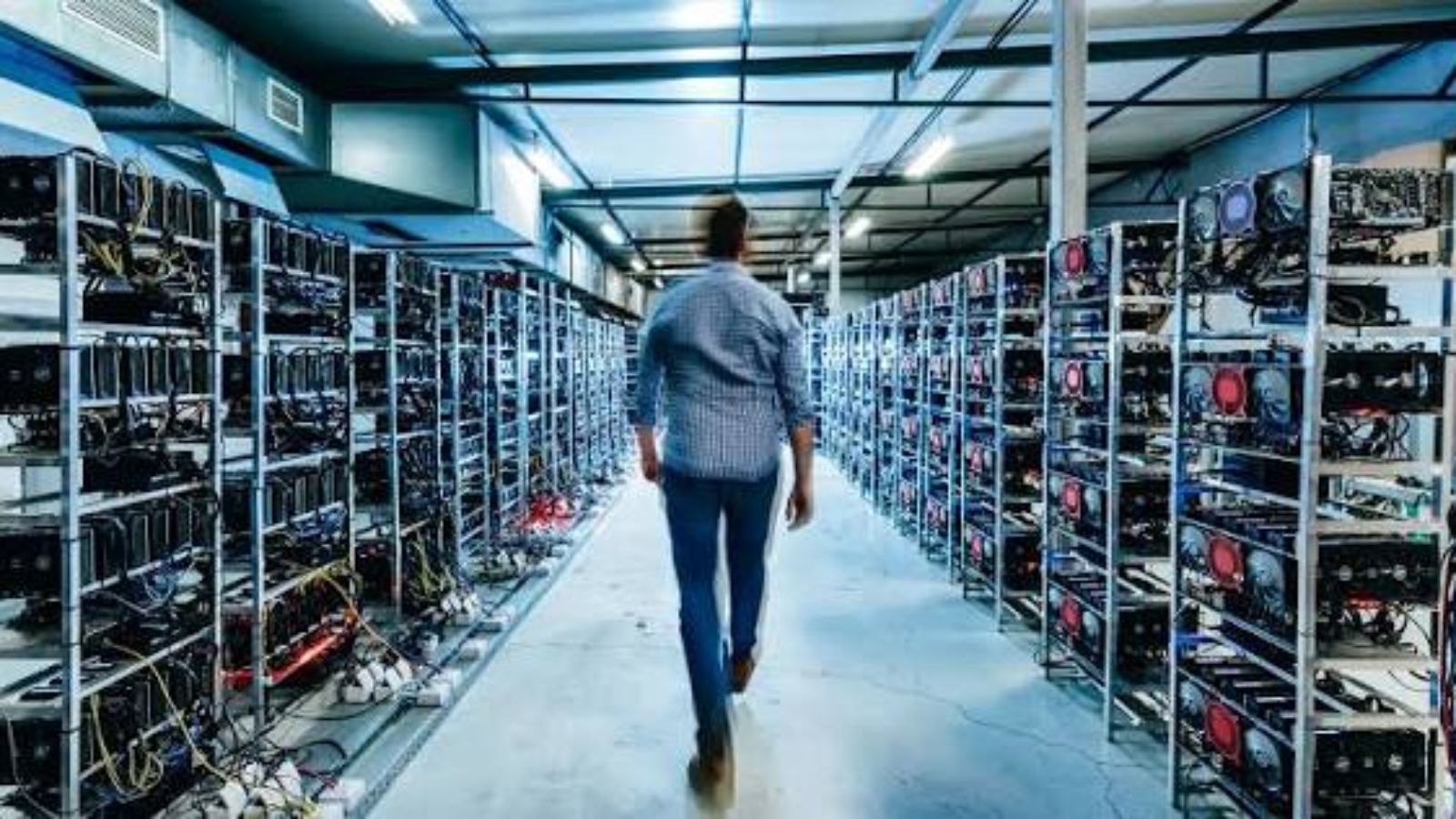
Modern mining facilities increasingly resemble sophisticated data centers rather than simple equipment warehouses.
Advanced operations now incorporate:
- Smart energy monitoring
- Automated environmental controls
- Remote management platforms
- Intelligent power distribution
- Fiber networking
- High-speed switching
- Cloud-based monitoring
- AI-assisted analytics
These technologies allow operators to monitor thousands of mining devices simultaneously while responding rapidly to changing operating conditions.
Why Infrastructure Determines Success
Many people entering cryptocurrency mining focus primarily on hardware specifications.
While hash rate remains important, infrastructure often determines whether those machines achieve their full potential.
Reliable operations require:
- Stable electrical systems
- Efficient cooling
- High-quality networking
- Continuous monitoring
- Preventive maintenance
- Experienced operational planning
The strongest mining environments are those where every system functions together as a coordinated ecosystem.
The Future of Bitcoin Mining
Bitcoin mining will continue evolving as semiconductor technology, artificial intelligence, renewable energy, and blockchain infrastructure mature.
Future developments are likely to include:
- More efficient ASIC architectures
- Greater AI integration
- Smarter energy management
- Advanced immersion cooling
- Increased automation
- Better predictive maintenance
- Enhanced cybersecurity
- More resilient infrastructure
The competitive advantage of tomorrow’s mining industry will not simply belong to those with the most machines, but to those capable of operating them with the highest levels of efficiency, reliability, and intelligence.
Final Thoughts
Bitcoin mining has transformed dramatically since the network’s earliest days. What began as a hobby performed on personal computers has evolved into one of the world’s most sophisticated high-performance computing industries.
As block rewards continue to decrease and competition increases, engineering excellence has become the defining factor behind successful mining operations.
Efficiency, intelligent infrastructure, sustainable energy, artificial intelligence, and secure systems are no longer optional—they are the foundations of modern Bitcoin mining.
At Bitmore, we continue to monitor the technologies shaping the future of blockchain infrastructure. Through research, technical analysis, and a commitment to understanding emerging innovations, we aim to provide valuable insights into the rapidly evolving world of cryptocurrency mining and decentralized computing.
Add a Comment